
Rollator vs Walker: Which Is Right for You?

QUICK ANSWER:
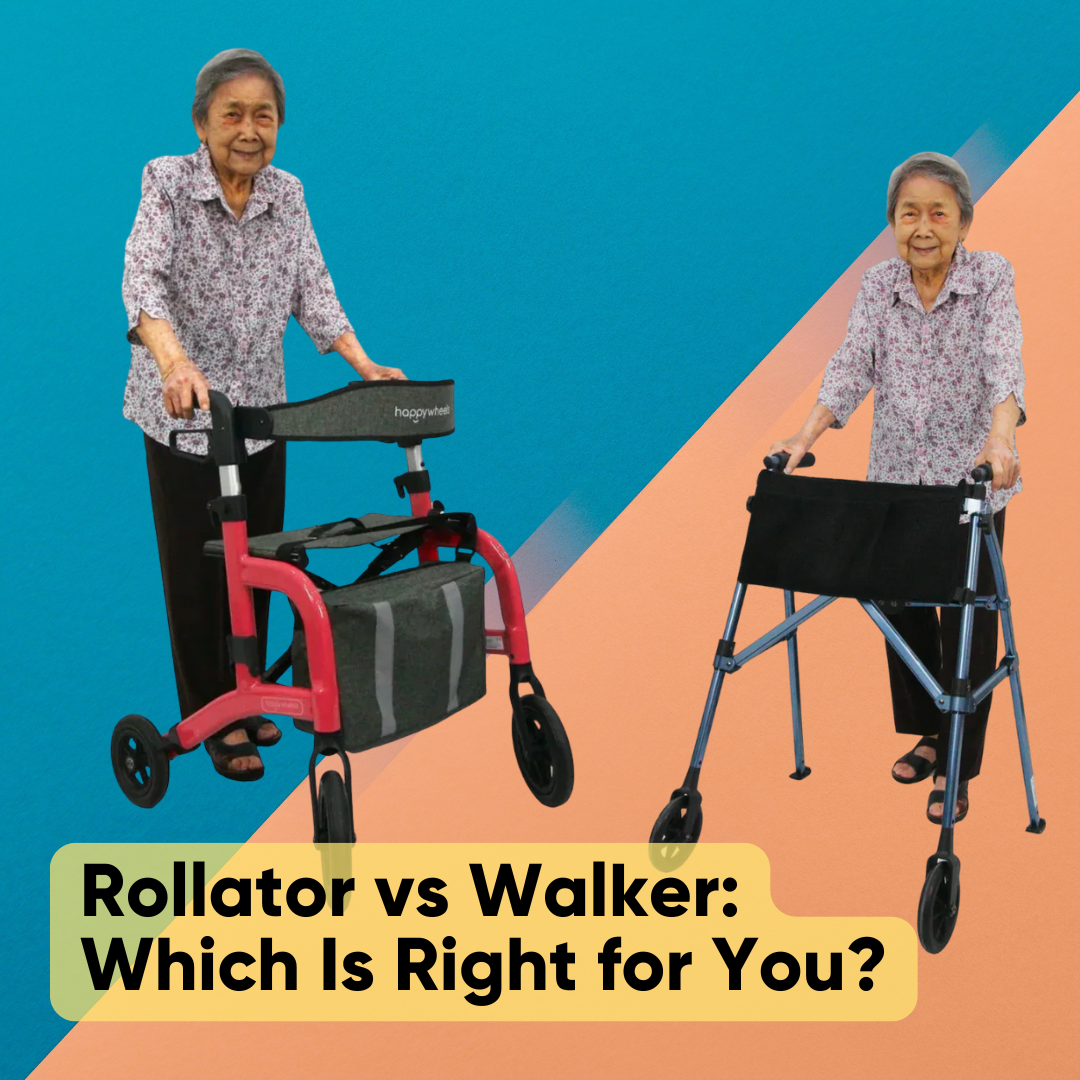
A walker (walking frame) is a sturdy, non-wheeled or 2 wheeled frame that requires partial lifting with each step. It provides maximum stability and is best for slow-paced walking over short distances. A rollator is a wheeled walking aid with 3 or 4 wheels, hand-operated brakes, and a fold-down seat. It rolls continuously without lifting and is designed for longer distances and users who need rest breaks.
Choose a walker if you need maximum balance support or tend to bear weight heavily through your arms. Choose a rollator if you can walk independently but need support for endurance, balance or carrying items.
In this guide:
- What is a walker?
- What is a rollator?
- Side-by-side comparison
- What should you choose?
- Singapore-specific considerations
- Safety tips for both
- Where to buy in Singapore
- Frequently asked questions
We will explain the key differences and how to decide which is appropriate for your situation. Choosing the right mobility aid can make a significant difference to your comfort, safety and independence. Walkers and rollators are two of the most commonly recommended mobility aids for elderly people in Singapore, but they service meaningfully different needs.
1. What is a walker?
A walker (also called a walking frame) is a mobility aid with a rigid frame and either no wheels or two small wheels at the front. The user lifts or slides the frame forward with each step, then leans on it for support. It provides maximum stability among two-handed walking aids.
→ No wheels or 2 front wheels: The lack of four wheels prevents the frame from rolling away, providing a stable, stationary support point.
→ Requires lifting or sliding to move forward: This gives the user full control of each step that they take, which is critical for those with very limited balance.
→ Best for short distances and slow pace: Walkers with no wheels require lifting action over a long distance, hence it is ideal to use it at home or short distances at walkways.
→ Maximum weight-bearing support: Users can lean heavily through their arms onto the frame, unlike rollators where brakes must be held to lock it.
→ Lightweight and often foldable: standard aluminium walkers typically weigh around 2 - 4kg, making it easier to store.
2. What is a rollator?
A rollator is a wheeled walking aid with 3 or 4 wheels, hand-operated squeeze brakes, a fold-down padded seat, and a storage basket. It rolls continuously without being lifted, requiring less upper body effort than a walker — making it practical for longer distances and active lifestyles.
→ 3 or 4 wheels: Allows smooth, continuous movement without lifting. 4-wheel models are more stable whereas 3-wheel models are more compact.
→ Hand-operated brakes: Squeeze brakes to slow or stop the rollator. Parking brakes lock it in place before the user is able to sit on the seat.
→ Built-in fold-down seat: Allows the user to rest anywhere mid-walk without needing a separate chair, which is valuable in Singapore’s weather.
→ Storage basket/bag: Users can carry medication, shopping or even their personal items independently without a separate bag.
→ Less lifting effort: Rollators rolls rather than lifts, which significantly reduces upper body and shoulder fatigue over longer walking distances.
3. Side-by-side comparison
| Features | Walkers | Rollators |
|---|---|---|
| Wheels | None or 2 (front only) | 3 or 4 |
| Brakes | Not available | Hand-operated squeeze brakes |
| Seat | No | Yes (padded + folded down) |
| Movement | Lifted or slide with each step | Rolls continuously, no lifting |
| Best for | Shorter distances, maximum stability | Longer distances, rest brakes |
| Typical user | Post-surgery, very limited balance | Light-moderate support, active elderly |
| Weight of aid | 2 - 4 kg | 5 - 10 kg |
| Price range (SGD) | From $40 - $150 | From $150 - $600 |
| Singapore suitability | Best for home/indoor use | Suitable indoors and outdoors |
| Weight capacity | Up to 120kg (standard) | Up to 120-160kg depending on model |
Wheels & Movement
WalkerNone or 2 (front only); lifted or slid with each step
Rollator3 or 4; rolls continuously, no lifting
Hardware & Safety
WalkerNo brakes; No seat
RollatorHand-operated squeeze brakes; Padded fold-down seat
Technical Specs
Walker2 - 4 kg; $40 - $150; Up to 120kg capacity
Rollator5 - 10 kg; $150 - $600; 120-160kg capacity
Best Use Case
WalkerShort distances; maximum stability; post-surgery
RollatorLonger distances; rest brakes; active elderly
4. What should you choose?
Choose a WALKER if you…
- Need maximum balance/stability support
- Need to bear weight heavily through arms
- Are recovering from surgery (early stage)
- Are in a smaller, indoor-only environment
- Have very limited confidence when walking
- Walk slowly or only short distances
Choose a ROLLATOR if you…
- Want to walk further with less fatigue
- Have enough balance to control rolling
- Would benefit from a rest seat mid-walking
- Walk Outdoors (Park connectors, shops)
- Have arthritis: less lifting = less joint strain
- Are post-surgery but can bear weight
Important — when neither may be suitable:
If the person cannot safely control walking speed, cannot operate hand brakes, or needs to lean very heavily through their arms for balance, neither a walker nor a rollator may be appropriate. In these cases, a wheelchair or pushchair provides safer mobility. Our specialists at +65 8657 1657 can advise on the right aid for your specific situation.
5. Singapore-specific considerations
| HDB flat corridors | Most Singapore HDB corridors are narrow. A 3 wheel rollator or a slim walker fits better than a wider 4 wheel rollator. Check the width before purchasing. |
| Outdoor pavements and park connectors | Rollators outperform walkers significantly outdoors. Wheels roll over cracks while walkers must be lifted over every obstacle. For Singapore's outdoor environments, a rollator is almost always the better choice. |
| Singapore’s heat and humidity | The built-in seats for rollators allow rest breaks in the shade without needing a separate chair, which is particularly valuable during outdoor walks in Singapore’s climate. |
| MRT and bus travel | A foldable walker or compact rollator can be folded and stored in priority seating areas. Check folded dimensions: MRT accessible spaces accommodate most mobility aids. |
HDB Flat Corridors
Most Singapore HDB corridors are narrow. A 3 wheel rollator or a slim walker fits better than a wider 4 wheel rollator. Check the width before purchasing.
Outdoors & Weather
Rollators roll over cracks easily while walkers must be lifted. The built-in seats allow rest breaks in the shade, valuable in Singapore's heat.
MRT and Bus Travel
A foldable walker or compact rollator can be stored in priority seating areas. MRT accessible spaces accommodate most mobility aids.
6. Safety tips for both
- Adjust height to wrist level — handles should be at wrist height when the user stands upright with arms hanging naturally. Incorrect height causes hunching and overextension.
- Keep pathways clear — loose rugs, trailing cables, and clutter are common causes of trips when using both walkers and rollators.
- Check rubber tips (walkers) — worn rubber ferrules on walker legs may lose grip, especially on smooth floors. Replace when visibly worn out.
- Check brakes and wheels (rollators) — test brakes before each use; check wheel bolts for tightness and tyre surfaces for wear.
- Use both hands — never carry items in one hand while walking with either aid: use the storage basket on rollators for carrying.
- Engage brakes before sitting — always lock parking brakes before using the seat.
7. Where to buy in Singapore
The Golden Concepts carries a curated selection of walkers and rollators at our showroom at 3 Ubi Ave 3, Crocodile House #05-02B, Singapore 408857. Our specialist team provides free consultations, height adjustments, and product demonstrations — open Monday to Friday 9.30am–6.30pm, Saturday 11am–6pm and Sundays 11am–4pm. Free delivery on orders above S$150. Call us at +65 8657 1657.
8. Frequently asked questions
What is the difference between a walker and a rollator?
A walker (walking frame) has no wheels or only two front wheels and must be lifted or slid forward with each step — it provides maximum stability and is suited for very limited mobility over short distances. A rollator has three or four wheels, hand-operated brakes, and a built-in seat — it rolls continuously without being lifted, requiring less effort and suited for longer distances with rest breaks. Walkers are generally lighter (2–5 kg) and cheaper (from S$40); rollators start from around S$150 and weigh 5–10 kg
Which is safer — a walker or a rollator?
Neither is universally safer — the safest choice depends on the user's specific mobility level. A walker is safer for users who need maximum stability, tend to bear weight heavily through their arms, or have very limited balance confidence. A rollator is safer for users who can walk independently and operate brakes, as it reduces fatigue and provides a rest seat, lowering the risk of overexertion falls. An incorrectly chosen aid can increase fall risk.
Can a walker be used outdoors in Singapore?
A walker can be used outdoors in Singapore, but with some limitations. Walkers must be lifted over every kerb, crack, and uneven surface — this is tiring and increases fall risk on Singapore's varied outdoor pavements. For outdoor use in Singapore (shopping malls, hawker centres, park connectors), a rollator is almost always more practical and safer due to its wheels, brakes, and rest seat.
How much does a walker or rollator cost in Singapore?
Standard walking frames in Singapore start from approximately S$40–S$80 for basic aluminium models. Rollators start from around S$150 for basic models and range up to S$500+ for premium models with advanced folding mechanisms and ergonomic features. The Golden Concepts carries both at our showroom at 3 Ubi Ave 3, Singapore 408857, with free delivery on orders above S$150.
Can I rent a walker or rollator in Singapore?
Yes. The Golden Concepts offers rental options for walkers and rollators — useful for short-term post-discharge recovery or trial before purchase. This is particularly practical for families who want to assess whether a rollator suits their loved one before committing to a purchase. Contact us at +65 8657 1657 or visit our Ubi showroom to enquire about current rental availability.
Leave a comment
Comments will be approved before showing up.
Also in Eldercare Equipment
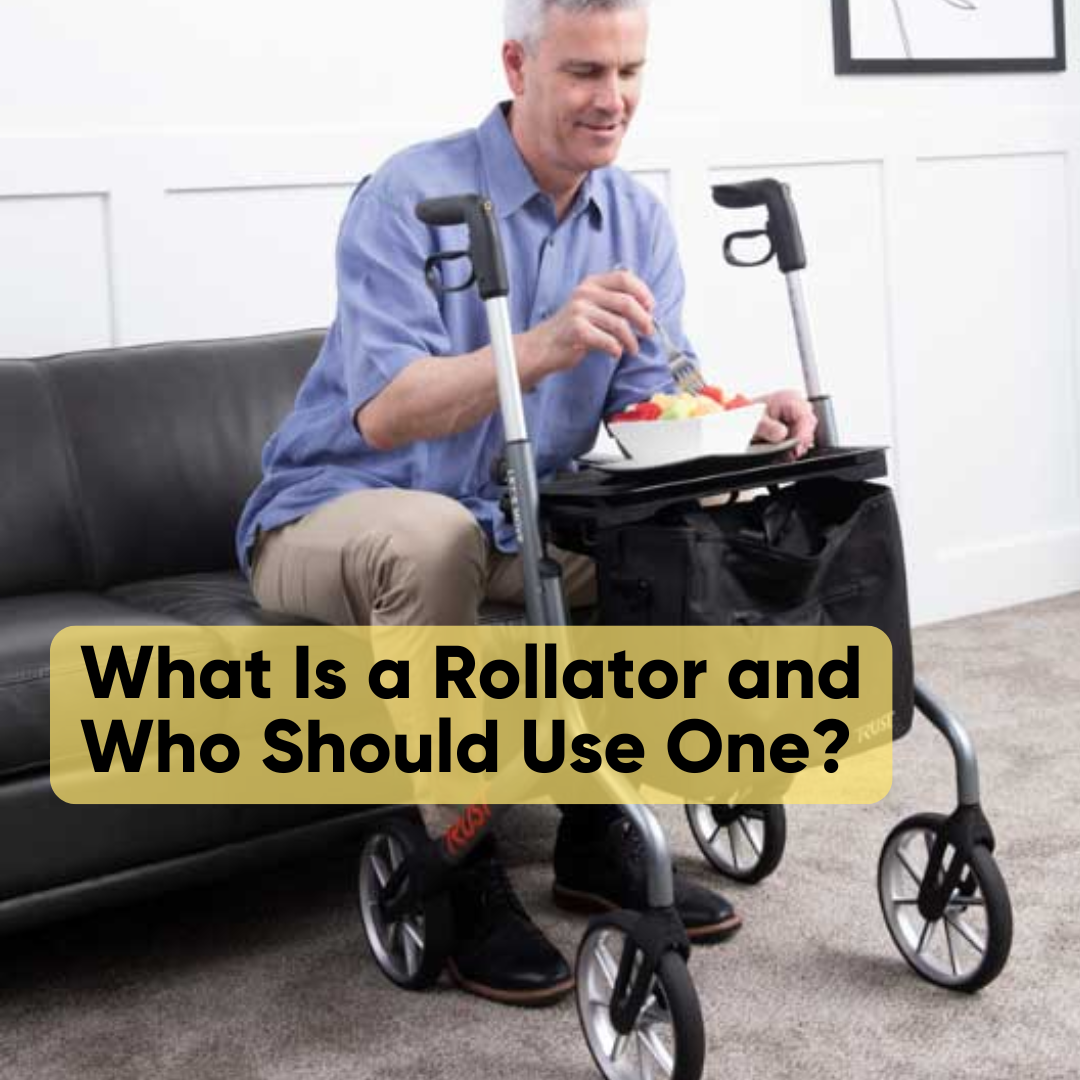

What Is a Rollator and Who Should Use One?
A rollator is a wheeled walking aid that offers comfort, safety, and independence for those needing light to moderate support. Discover its features, benefits, and tips for choosing the right model.

The Complete Guide To Choosing A Wheelchair
The Complete Guide To Choosing A Wheelchair — from types and benefits to choosing the right model for your needs. Make an informed choice for comfort and independence.
Read More

Understanding Pressure Ulcers: Prevention, Treatment & Solutions
Pressure ulcers, also known as pressure sores or bedsores, are a common but preventable condition affecting people with limited mobility. Caused by prolonged pressure on the skin, they can lead to serious complications if left untreated. This comprehensive guide explains the stages of pressure ulcers, who is most at risk, and proven strategies for prevention and treatment. Learn how pressure-relieving mattresses and alternatives like the Treat-Eezi Mattress Overlay can help reduce pressure, improve comfort, and support the healing of pressure sores—without the noise or maintenance of traditional air mattresses.