
Elderly Fall Prevention: 5 Myths That Hinder Your Loved Ones
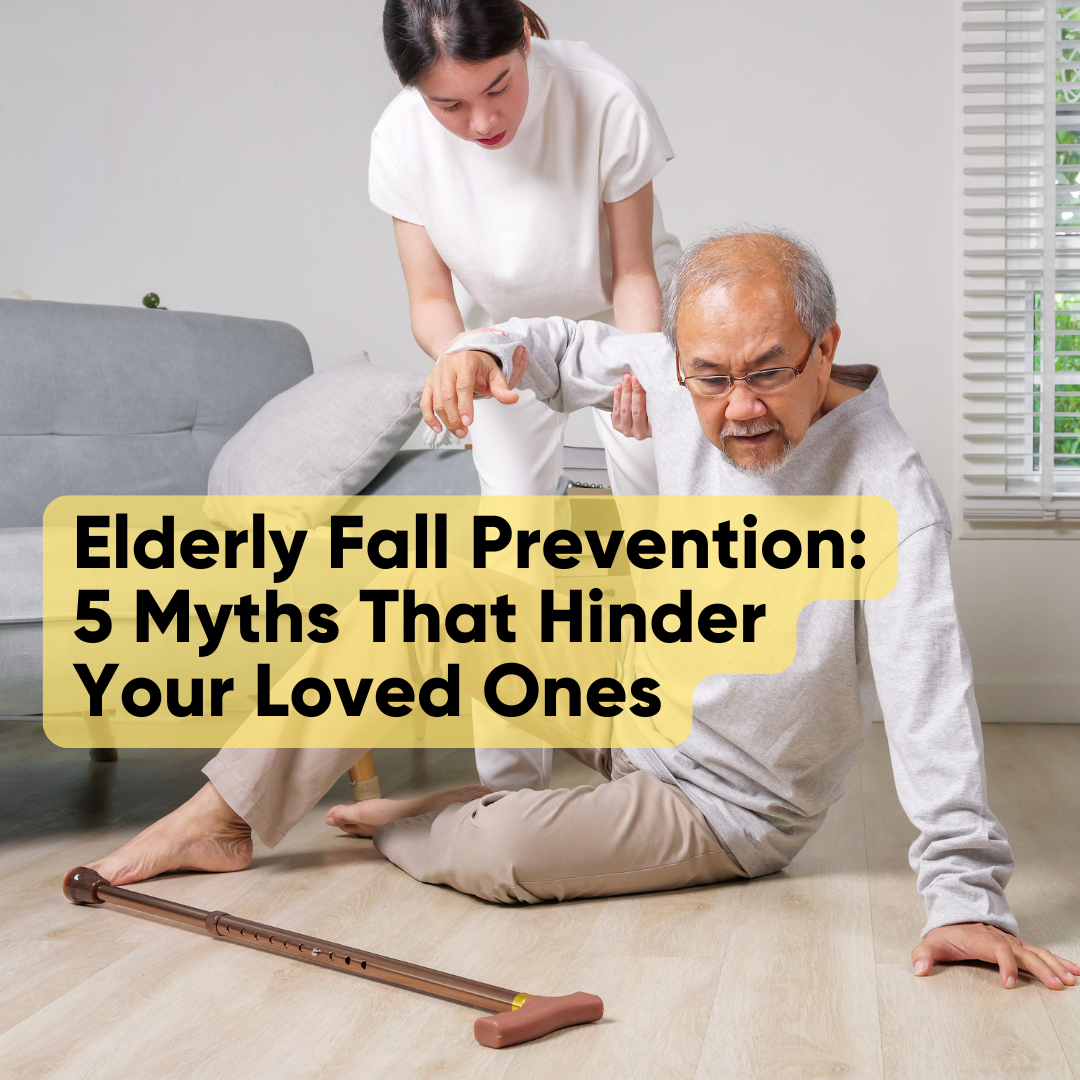

QUICK ANSWER — FALL MYTHS VS FACTS:
Myth 1: Limiting activity prevents falls. FACT: Inactivity causes muscle weakness, which increases fall risk.
Myth 2: Staying indoors is safer. FACT: Over 50% of falls occur at home, especially in bathrooms and on stairs.
Myth 3: Medications don't affect risk. FACT: Blood pressure, sleep, and mood medications significantly increase risk.
Myth 4: Mobility aids cause falls. FACT: Correctly fitted aids reduce falls and improve stability.
Myth 5: Vision problems don't contribute to falls. FACT: Poor depth perception and peripheral vision are major risk factors.
Falls are the leading cause of injury-related hospitalisation among elderly people in Singapore. Understanding the real risk factors — and correcting widespread misconceptions — is essential for effective fall prevention. Below, we address the five most common myths that lead caregivers and seniors to make decisions that inadvertently increase fall risk.
In this guide:
- Limiting activity prevents falls
- Staying indoors reduces fall risk
- Medications do not increase fall risk
- Mobility aids make you more likely to fall
- Vision problems do not contribute to falls
- Frequently asked questions
1. Limiting activity prevents falls
This is one of the most damaging myths in eldercare. When physical activity is reduced out of caution, the elderly person rapidly loses muscle strength, balance, and joint flexibility — all of which directly increase fall risk. The less a person moves, the more dangerous movement becomes.
- Tai chi: Reduces fall frequency by 43–50% in community-dwelling elderly adults (multiple RCT studies)
- Strength training: Twice weekly significantly improves balance and gait speed in adults over 70
- Daily walking: 20–30 minutes maintains lower limb strength and cardiovascular health.
- Combined exercise: Programmes combining balance, strength, and flexibility show the greatest fall reduction effect
Tai chi classes are widely available at community centres (CCs) across Singapore at low cost. Hospital-based physiotherapy programmes for fall prevention are available through restructured hospitals and polyclinics — ask the doctor for a referral if your loved one has already fallen.
2. Staying indoors reduces the risk of falling
According to the National Institute on Aging (NIA), over half of all falls in elderly people occur inside the home. In Singapore's context, wet bathroom floors — marble and ceramic tiles that become extremely slippery when wet — are among the most hazardous surfaces for elderly residents.
The most hazardous home locations for elderly falls in Singapore:| Location | Why it is high-risk | Recommended Interventions |
|---|---|---|
| Bathroom | Wet marble/tile floors; no support when transferring to/from toilet or shower | Grab bars, anti-slip mat, shower chair, raised toilet seat |
| Stairs | Reduced depth perception; fatigue; handrail may be absent or too low | Stair handrails both sides, stair assist cane |
| Bedroom | Low bed height; dark environment; rush to toilet at night | Bed rail, bed lever, night light, bed sensor alarm |
| Living Room | Loose rugs, low sofas, coffee table corners, trailing wires | Remove loose rugs; raise sofa height with cushions; clear pathways |
| Kitchen | Wet floors; reaching for high shelves; hot surfaces causing sudden movement | Non-slip mat; step stool with handrail; reorganise frequently used items to waist height |
Home Hazard Details
BathroomWet marble/tile floors; no support when transferring to/from toilet or shower. Use grab bars, anti-slip mat, shower chair, raised toilet seat.
StairsReduced depth perception; fatigue; handrail may be absent or too low. Use stair handrails both sides, stair assist cane.
BedroomLow bed height; dark environment; rush to toilet at night. Use bed rail, bed lever, night light, bed sensor alarm.
Living RmLoose rugs, low sofas, coffee table corners, trailing wires. Remove loose rugs; raise sofa height with cushions; clear pathways.
KitchenWet floors; reaching for high shelves; hot surfaces. Use non-slip mat; step stool with handrail; reorganise items to waist height.
3. Medications do not increase the fall risk
Medication Review is Essential
Many of the most commonly prescribed medications for elderly people in Singapore directly increase fall risk through dizziness, sedation, muscle weakness, or blood pressure changes. This is not a reason to stop taking them — it is a reason to review them regularly, speak with your doctor about it and take preventive measures.
4. Mobility aids make you more likely to fall
This myth often prevents elderly people from using aids that would genuinely protect them. Mobility aids are specifically designed to provide additional support, reduce the muscular effort of walking, and improve balance — when correctly fitted and used. An incorrectly fitted aid (e.g. a cane set to the wrong height) can increase fall risk, which is why fitting matters.
| Mobility Aid | Best for | Correct fitting |
|---|---|---|
| Walking Cane | Light support, mild balance issues | Handle at wrist height when arm hangs naturally |
| Quad Cane | More balance support needed; fear of falling | Same as cane; ensure all 4 feet contact ground evenly |
| Walking Frame | Moderate support; user needs to bear weight through arms | Handles at wrist height; no hunching |
| Rollator | Light-moderate support; longer distances, rest breaks needed | Handle height at wrist; brakes tested before use |
| Wheelchair/Pushchair | Cannot safely walk distances; need caregiver assistance | Seat width 2–3 cm wider than hips; footrests adjusted |
Mobility Aid Fitting
CaneBest for: Light support. Fit: Handle at wrist height.
Quad CaneBest for: Fear of falling. Fit: Ensure all 4 feet contact ground evenly.
WalkerBest for: Moderate support. Fit: Handles at wrist; no hunching.
RollatorBest for: Longer walks. Fit: Handle at wrist; test brakes before use.
WheelchairBest for: Caregiver assistance. Fit: Width 2-3cm wider than hips; adjust footrests.
5. Vision problems do not contribute to falls
Vision changes are among the most underestimated fall risk factors in elderly people. The following specific vision changes all directly affect the ability to detect hazards and navigate safely:
| Problem | How it affects fall risk |
|---|---|
| Reduced depth perception | Makes it difficult to judge the height of kerbs, steps, and uneven surfaces — a leading cause of tripping |
| Reduced contrast sensitivity | Difficulty distinguishing edges between surfaces (e.g. step edge against floor) — worsens in low light |
| Peripheral vision loss | Reduces awareness of obstacles to the side — common in glaucoma; significantly increases fall risk in crowded spaces |
| Uncorrected refractive error | Wearing an outdated glasses prescription causes blurred vision and misjudgement of distances |
| Cataract | Reduces visual acuity and contrast; cataract surgery has been shown in studies to reduce fall rates post-operatively |
| Bifocals during stair use | The lower lens segment distorts stair depth perception — recommend removing bifocals on stairs |
Action steps for vision-related fall prevention:
- Ensure annual eye examinations — update prescription glasses every 1–2 years.
- Ensure all areas of the home, especially stairs, bathrooms, and corridors, are well lit.
- Install night lights between bedroom and bathroom for safe navigation during night-time toilet trips.
- Consider single-vision glasses for stair use if wearing bifocals or progressive lenses.
Vision Issues
PerceptionReduced depth perception makes judging kerbs/steps difficult; reduced contrast hides edges.
PeripheralPeripheral loss (glaucoma) reduces awareness of side obstacles.
CorrectionOutdated prescriptions and cataracts cause blurring. Bifocals distort stair depth.
6. Frequently asked questions
What is the most effective way to prevent falls in elderly people?
The most effective fall prevention strategies combine exercise, home modification, and medication review. Exercise programmes that include balance training, strength training, and flexibility — such as tai chi — reduce fall frequency by up to 50% in community-dwelling elderly adults. Home modifications such as installing grab bars in bathrooms, improving lighting, and removing loose rugs address environmental hazards. Medication reviews by a doctor or pharmacist identify drugs that increase fall risk and may be adjusted or replaced.
How common are falls in elderly people in Singapore?
Falls are the leading cause of injury-related hospitalisation among elderly people in Singapore. Approximately 1 in 3 community-dwelling adults over 65 experiences at least one fall per year. Over half of these falls occur at home, with bathrooms and stairs being the most common locations. Hip fractures resulting from falls carry a 20–30% one-year mortality rate in elderly patients, making fall prevention one of the highest-priority areas in elderly care.
Does exercise really help prevent falls in elderly people?
Yes. Multiple randomised controlled trials have shown that exercise programmes combining balance training, lower limb strength training, and flexibility reduce fall frequency by 23–50% in elderly people. Tai chi has the strongest evidence base and is widely available at community centres (CCs) across Singapore at low cost. Even simple daily walking of 20–30 minutes or exercise at home helps in maintaining lower limb strength and improves cardiovascular health. Elderly people who reduce physical activity out of caution typically experience faster muscle weakening and higher fall risk.
What home modifications prevent falls in elderly people in Singapore?
The most effective home modifications for fall prevention in Singapore include: installing grab bars next to the toilet, in the shower, and along stairways; fitting non-slip mats in bathrooms and kitchens; installing bed rails for safe transfers; improving lighting in corridors, stairs, and bathrooms; removing loose rugs and trailing wires; and raising low sofas with firm cushions.
Should I get a mobility aid for my elderly parents to prevent falls?
If your elderly parent has experienced a fall, near-fall, or reports feeling unsteady when walking, a mobility aid is likely to reduce rather than increase fall risk. The key is correct fitting — an incorrectly adjusted cane or walker can make things worse. Common options include walking canes for mild balance issues, rollators for longer distances with rest breaks, and walking frames for users who need to bear weight through their arms.
Leave a comment
Comments will be approved before showing up.
Also in Caregiving





How to Choose the Best Lightweight Wheelchair for Elderly Parents
Choosing the right wheelchair for an elderly parent can feel overwhelming, especially with so many options available today. A lightweight wheelchair offers greater mobility, ease of transport, and independence - key factors in enhancing your loved one’s quality of life.